Blog

A New Novella from John Clarke

Historical fiction and romance collide in an account of young people during a time when the Vietnam War and its aftermath dominate the headlines.

As the heat from the 1967 Summer of Love turns to the chill of winter, a relationship both sweet and bitter is renewed. Decades after their whirlwind 1960s romance ends, strait-laced medical student Carl Blanchard and free-spirited artist Jo Cranston lead separate lives. When a premonitory dream precedes Jo’s sudden reappearance as his patient, Carl and his wife Brenda must confront the past. Their attempt to heal her sets in motion a chain of events spanning continents, culminating in a bittersweet final gift that will forever link their families and test the boundaries of fate and love.

The Silence Between Years is a masterfully written novel that explores the enduring connections between people and the choices that define their lives…a compelling and heartfelt read.

Readers who enjoy the works of Nicholas Sparks or Kristin Hannah will appreciate Clarke’s ability to blend emotional depth, personal growth, and poignant relationships into a detailed historical setting.” — Carol Thompson for Readers’ Favorite.

“…the narrative balances intellect and feeling: science and art, duty and desire, then and now. … The writing is thoughtful without being heavy, and poignant without slipping into sentimentality. It’s a story about compassion, second chances, and how love—of any kind—can quietly reshape a life.” — Jennifer Senick for Readers’ Favorite.

…an incredibly beautiful ending, this is a five-star read. Very highly recommended.” — Jamie Michele for Readers’ Favorite.

Reviewer #1

The Silence Between Years by John Clarke is a powerful story set during the Vietnam War era, capturing the turbulence of a generation struggling with love, loss, and self-discovery. Clarke skillfully crafts a narrative that spans decades, examining the complexities of relationships, the burden of personal choices, and the lasting effects of past connections.

“The story starts with Carl Blanchard, a pre-med student, navigating the counterculture of the 1960s. His chance reunion with Joie Cranston, a high school sweetheart turned free-spirited artist, sets the stage for a journey full of emotional highs and lows. The realities of their diverging paths challenge their rekindled bond.

“The novel’s exploration of themes such as love, sacrifice, and the search for meaning is complemented by its historical context. John Clarke’s firsthand experiences during the Vietnam War era immerses readers in the cultural and political climate of the time. The vivid descriptions of Atlanta’s hippie scene, the challenges of medical school, and the haunting landscapes of Laos create a compelling backdrop for the characters’ journeys. The writing captures the era excellently. The dialogue is genuine, and the pacing is seamless.

The Silence Between Years is a masterfully written novel that explores the enduring connections between people and the choices that define their lives. Readers who enjoy the works of Nicholas Sparks or Kristin Hannah will appreciate Clarke’s ability to blend emotional depth, personal growth, and poignant relationships into a detailed historical setting. Fans of authors who explore themes of love, loss, and resilience will find The Silence Between Years a compelling and heartfelt read.” — Carol Thompson for Readers’ Favorite.

Reviewer #2

The Silence Between Years by John Clarke is a sweeping read that had my emotions and heart pumping with a fierce arrhythmia. As much as I appreciate Carl as a solid and really caring protagonist, it is the women who take the story to a totally different level.

“Clarke presents Jo’s art as a lifeline that reshapes her direction while her trusted friends, Carl and Brenda, encourage her talent and health.

“The story hits its strongest note when Clarke takes us to Laos in the footsteps of veterans from Luang Prabang to the Plain of Jars, where Jo’s landscape art is a distinct shift from her prior medical illustrations and psychedelic work. I love that her arc is tied to her art, and with an incredibly beautiful ending, this is a five-star read. Very highly recommended.”— Jamie Michele for Readers’ Favorite.

Reviewer #3

“The Silence Between Years by John Clarke is an emotional novel about lost love, unexpected chances, and what it really means to move forward. It begins with Carl, a medical student, reconnecting with his high school sweetheart, Jo, during a trip to Atlanta in search of adventure. Years later, Carl—now a doctor—once again finds his past and present colliding when he meets her again, now known as Josephine Meyers. He learns she’s married to a soldier missing in action. As their lives continue to intertwine through medicine, memory, and mystery, the book asks questions about fate, hope, and the bonds that last long after goodbye. Will they ultimately meet at a point in time that brings them together like they used to be, or will life follow a different course?

“The Silence Between Years left me thinking long after I finished reading the last page. It’s the kind of story that feels quiet at first but slowly builds as it makes its way into your heart. John Clarke writes with such tenderness that even the smallest moments, like an old memory, a hospital conversation, or a simple act of kindness, are charged with emotion.

“What stood out to me the most was how the narrative balances intellect and feeling: science and art, duty and desire, then and now. My favorite part was how Carl gave Jo the gift of using her natural talent in a way she had always wanted to. The writing is thoughtful without being heavy, and poignant without slipping into sentimentality. It’s a story about compassion, second chances, and how love—of any kind—can quietly reshape a life.”—Jennifer Senick for Readers’ Favorite.

Find the Novel on Amazon: https://www.amazon.com/Silence-Between-Years-John-Clarke/dp/B0FVXM3JKV?

Simulated Mechanical Chaos. Toy or Teaching Tool?

For years, I had a wood and plastic mechanical chaos demonstrator sitting on the front of my desk in my Navy office. As I anticipated, visitors could not resist the urge to spin the wheels and watch the chaotic motion that ensued.

Depending on the context of the conversation, those spinning wheels could represent the harmony or disharmony between individuals, or departments within an organization, or between the head office and various departments. In my novels, I had one demonstrator sitting on the desk of the President of the United States, serving as a reminder of how normal behavior can turn into chaotic conflict without warning. POTUS would use it as an object lesson when dealing with Senators, Representatives, or Heads of State.

In other words, the toy demonstrates far more than the physics of a toy.

Chaos Simulation Concept

The concept behind the toy is as follows: Each three-spoked wheel sits atop a pin, thereby earning the name pinwheel. At the end of each spoke is a magnet. The magnets all have the same polarity exposed to the outer surface of the spoke. Therefore, as magnets from one wheel approach a magnet from the other wheel, there is a repulsive force applied to each spoke.

The user spins each wheel in whichever direction they wish: clockwise or counterclockwise. The amount of rotational force applied to each wheel’s hub determines how fast the wheels turn. At high rotational speed, the magnetic repulsion exerts little influence on the spinning wheels. But as the wheels slow down due to resistance within the pin and wheel hub contact point, the repulsive forces begin to exert an effect on the wheel’s rotation. Very quickly, that battle of the magnets devolves into chaos. The rotation of each wheel becomes unpredictable.

It is entertaining to watch. That is, as long as you don’t think too hard about the geopolitical implications.

Chaos Simulation

I have an innate desire to simulate things. If I can successfully simulate something in code, then I know I understand what’s going on. So, I attempted the Wheels simulation using Visual Basic. My code sort of worked, but after a minute or so of running, the simulated wheels would speed up until they were nothing but a blur.

The code obviously had issues.

Losing interest, I moved on to other, more successful simulation topics and forgot about the Wheels. Until ChatGPT came along. After giving GPT-5 a detailed prompt, the AI laid out 550 lines of HTML code. I was amazed.

The first time I ran that code with my Chrome browser, it worked. And after two days of tweaking the code to work exactly the way I wanted, it worked well enough to share.

Chaos Video

The following link is to the YouTube video which accompanies this blog post.

https://youtu.be/mKwyurn4sr4

YouTube Video Description

“A computer version of a mechanical Chaos Simulator was created in HTML code so it can be run from any popular web browser. It introduces Chaos Theory and is a model for the unpredictability of both interpersonal and geopolitical interactions.

Unlike the physical simulator it replaces, it is both quantitative and highly interactive. Thus, it is transformed from a toy to a teaching tool for high school introductory physics, or college-level, calculus-based classical mechanics lessons. The fact that it uses simulated magnetism to occasionally create a harmonic oscillator may also be of interest to junior-level Electricity and Magnetism students.”

The Result

      Baseline

For a baseline, the wheels have no magnets; i.e., no repulsive or attractive force generators. The mass of the magnet is present, but no magnetic fields are produced.

Both wheels are spun with the same impulse magnitude, but in opposite directions. The left wheel (wheel 1) is “spun” with a clockwise motion, and the right wheel is forced counterclockwise. After the initial impulse, no other spinning force is applied to the wheels. 

The wheels begin rotating with the same velocity. The gray line in the figure below is the line for zero angular velocity. The blue wheel spinning clockwise has, by convention, a positive angular velocity. The red wheel spinning counterclockwise has, by convention, a negative angular velocity.

Due to the effect of wheel hub friction (resistance), both wheels begin slowing down. After 50 seconds, the wheels are essentially still, approaching zero velocity.

Chaotic Repulsion

Now lets add magnetic fields to the ends of the spokes. Initially, the simulated magnets are oriented so that only repulsive forces are encountered as opposing magnets approach. However, the magnets do not make physical contact. Due to the strength of the magnetic fields, the magnets exert forces on each other from a distance.

Whenever a red or blue line approaches the central gray line, the respective wheel has essentially stopped momentarily. When the blue line descends below the gray line, the blue wheel has stopped moving clockwise and is moving counterclockwise. Likewise, when the red line rises above the gray zero line, the red wheel is moving clockwise, rather than its original counterclockwise motion.

The net result is chaotic movement.

The next figure captures the moment of magnetic (but not physical) contact between the opposing wheels. The oblique lines illustrate the repulsion force vectors, indicating angle and magnitude information about those vectors at that particular instant.

Teaching Tool

The more I played with the computer simulation, the more I discovered how sophisticated the model was and how useful the results were. On the one hand, it illustrates chaotic (unpredictable) behavior. As you might imagine, Chaos Theory is of considerable academic interest.

However, I quickly appreciated the sim’s potential for illustrating physics topics in Classical Mechanics. My aged library of freshman and sophomore college physics books contains calculus-based topics that are integral to the working of this model. Relevant examples range from force vectors to harmonic motion.

In Third-Year Electricity and Magnetism physics courses, the subject of magnetostatics covers boundary conditions on magnetic fields. That is relevant because within the Sim’s HTML code, a very simple implementation of changing magnetic field locality, is invoked. Although for simplicity, the magnets are considered as point sources, the extent of the magnetic fields is variable, encoded within the program’s code. Since the code is HTML, altering it to suit the user’s needs is trivial.

Force model: F = repulsive*exp(-kR*(d - d0)) - attractive*exp(-kA*(d - d0))
const kR = 0.01; // repulsion locality
const kA = 0.02; // attraction more spread-out

At the undergraduate level, these topics require calculus to adequately understand them. Indeed, looking at the constantly varying shape of the angular velocity plots produced by the simulation, the invocation of calculus is obvious. However, even when using algebra in a high school physics class, the simulation should still be a useful tool.

Physics Curricula

The following table illustrates where the topic of classical mechanics is typically distributed throughout the physics education curriculum. Within each educational topic, it is my opinion that the magnetic pinwheel simulator has a teaching role.

TopicHigh School (Intro)University Physics IAdvanced Undergraduate / Graduate
Force & Vectors 
Inertia 
Momentum & Impulse 
Torque
Rotational Velocity
Harmonic Oscillator

The Unexpected Harmonic Oscillator

One of the delights of simulation is that the unexpected will occasionally appear. The fun part is figuring out why the unexpected happened.

A case in point follows.

When preparing the downloaded HTML code, nullify the repulsive force slider, maximize the attractive force slider, maximize hub resistance (friction coefficient), and set a moderate initial transient impulse on wheel 1. Set the initial transient wheel 2 impulse at about 60% of wheel 1. Select clockwise initial rotation for wheel 1 and counterclockwise rotation for wheel 2.

The result is remarkably different from the simulations with high repulsion forces. There is no chaos, per se, but a rapid decrease in rotational velocity as a result of the intermittent attraction forces between close magnets and hub resistance. When two magnets become magnetically bonded to each other, wheel motion transitions to that of a damped harmonic oscillator.

Curiously, the nature of the oscillation is probabilistic. About a third of the time, the two wheels oscillate in phase, a third, 180° out of phase, and another third, with no oscillation at all.

I’ll leave it to the interested reader to ponder why the oscillations seem less damped than the non-oscillatory movement.

Download

If you wish to try this simulator, the HTML code can be downloaded here in the form of a zip file. As always, be sure to check your download with a virus checker before running the code on a web browser like Chrome.

Here is a link to a zip file containing the HTML code for running in your browser.

Also, it’s a good habit to inspect any downloaded HTML code with a text editor like Notepad or Notepad++ to confirm it is harmless.

Questions?

As always, if you have questions, I can be contacted at john@johnclarkeonline.com.

Don’t Let that Lying ChatGPT Trick You!

Just because technology is easy to use, doesn’t mean it’s right.

ChatGPT is renowned for its wide breadth of knowledge. As a scientist-writer, I use it almost daily to discover sources for my writing. For instance, to validate a strange storyline I knew zilch about, I gave ChatGPT the following prompt:

“List examples of dead people who have reappeared in full human form to provide a message to loved ones.”

It responded thusly:

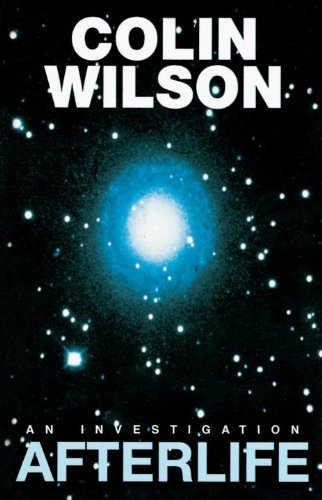
Wilson, C. (1990). Afterlife: A History of Life After Death. Grafton.

ChatGPT said of the book, “It surveys historical and modern reports of post-death contact, including full-body manifestations intended to comfort the living. Covers spiritualist and non-religious traditions alike.”

It even offered to provide the book’s bibliographic citation in all the usual formats, including APA, Chicago, and MLA. After struggling to do that job manually many times, I thought that was a great feature.  Thank you, ChatGPT, for saving me the time and effort!

That was followed by what it called a “Summary Chart” of information:

CaseDeceased PersonMessage TypeWitnessesSourceNotes
Lincoln Whitehouse GhostAbraham LincolnSilent presence, calmMary Todd Lincoln, staffWilson (1990)Seen in bedroom and halls post-assassination

I was impressed!

Except for one tiny detail. When I attempted to buy the book, it did not exist!

It was pure fabrication! Or as AI apologists prefer to call it, a hallucination!

Wilson’s Book

The actual book by Colin Wilson, which I now own, is titled “Afterlife: An Investigation of the Evidence for Life After Death.”

Version 1.0.0

It was initially published in 1985, then under a new publisher in 1987, but NOT in 1990. It was first published in Great Britain by Harrup Limited, not by Grafton. Furthermore, the book includes nary a single word about “Lincoln” or “White House.”

So, ChatGPT got the title, year, and publisher wrong. Therefore, the nicely formatted bibliographic citations were garbage. (Woe be to any student who might include them for “references.”)

Furthermore, ChatGPT’s offer to summarize the book was a red herring. The book had nothing to do with Abraham Lincoln, Mary Todd Lincoln, or the White House.

It is hard to imagine how ChatGPT could cram such a great amount of disinformation into such a small space.

Philip Arnold

To add to the confusion, there is a book titled Afterlife: A History of Life After Death. It was written by Philip Almond, an academic, and published in 2016 by Cornell University Press.  

Ironically, by 2016, Colin Wilson was deep within his Afterlife. He passed in 2013 at the age of 82.

Due Diligence

The phrase “due diligence” refers to thoroughly checking your sources. Your teacher/professor probably knows the assigned subject matter and references better than you and ChatGPT combined.

It cost me five dollars to verify my reference by purchasing the book, but it might cost students a lot more if they don’t. So, students beware! By asking ChatGPT to do your homework, you may risk receiving an F on your grade.

As we say in the aviation world, check, check and double-check. So far, until proven otherwise, no AI assistant is entirely trustworthy.

The Earth is Not Our Property? Really?

Are we the aliens on planet Earth?

At least one brilliant and knowledgeable scientist thinks so.

There was a good reason why a famous 1982 Spielberg movie was named “E.T. the Extraterrestrial.” For decades, “E.T.” was the initialism that American culture associated with Extraterrestrial Aliens, creatures from outer space.

But now it isn’t in fashion. In fact, the notion of “aliens” has seemingly been replaced by NHI, “non-human intelligence,” at least in official government channels. Gone is the obsession with aliens from outer space. In fact, gone is the obsession with aliens, period.

Why might that be? Well, the anthropologist Dr. Michael P. Masters makes the argument in his book The Extratempestrial Model that so-called aliens might be human time travelers.

However, there is a corollary to the old (over a hundred years old) question about aliens that has arisen once again.

Who are the original intelligent occupants of planet Earth? Are we the aliens?

My long-held response to such ludicrous questions used to be, “Poppycock!”

Until a few days ago. Now, I’m not so sure.

Garry Nolan

My understanding of the universe and our place in it was recently shattered when a highly credentialed and respected scientist from Stanford said something incredible during a Podcast interview. Jordan B. Peterson, a Canadian psychologist, author, and Podcaster (The Jordan B. Peterson Podcast), interviewed Dr. Garry Nolan for Episode 563 (July 17, 2025) of his podcast. The tagline for that episode was startling: “Something Non-Human Has Been Here a Long Time.

Dr. Garry Nolan – screen capture from the 2025 interview with Jordan Peterson.

Garry Nolan is a Professor in the Department of Pathology at Stanford University. Actually, that is an understatement. He is a British-American immunologist, academic, inventor, and business executive. He holds the Rachford and Carlota A. Harris Professor Endowed Chair in the Department of Pathology at Stanford University School of Medicine. Nolan has founded biotechnology companies and is the senior science advisor for the Skywatcher program which lures UFOs (UAPs) to land and be captured.

Dangerous stuff there, in my humble opinion.

During the closing minutes of the 90-minute interview, Peterson asked Nolan for his conclusion about the presence of NHI on Earth. Nolan’s response was a shocker.

“I conclude that there’s definitely something here. But I think the more interesting conclusion is if they are, if something is here, it’s likely been here longer than humans have even been civilized. So, it really opens the question, and actually it’s something that I think Charles Fort actually said, …Earth is probably somebody else’s property.” 

Let that sink in for a moment.

Charles Fort

The person Nolan mentioned, Charles Fort, was even more draconian than Nolan. In the first chapter of his first book, Book of the Damned, published in 1919, he claimed that some unknown intelligence may own the Earth and its inhabitants. He wrote, “I think we’re property.” Twelve years later, one of Fort’s speculative writings in his third book, Lo!, is the most chilling of all. He wrote in no uncertain terms, “The Earth is a farm. We are someone else’s property.”

As can be heard in Part 1 of the Audiobook version of his book, Fort explains that the “damned” are those natural observations, data, that “science has excluded.”

Charles Fort. an early 20th century American writer and researcher

Ninety-four years later, most of us view Fort’s imaginative musing with a bit of subdued laughter and a healthy serving of skepticism. However, when a scientist of international caliber and fame such as Stanford’s Gary Nolan, repeats Fort’s idea, deadpan, in all considered seriousness, then, we have the makings of a nightmare.

That may be the reason that the cognoscenti in government and world leadership are so determined to resist full disclosure at all cost. It might scare the crap out of us.

Most of us with a good reason to believe that aliens and their craft have visited Earth, are perplexed by the resistance of the government to disclose visitation from other worlds. Surely, we can accept that fact, despite often-heard protestation that we are “not ready” to know the whole truth.

On the other hand, maybe they are correct. Perhaps, we are not ready for what Gary Nolan and Charles Fort had to say.

What if those two savants, Fort and Nolan, are correct?

What if Nolan’s recent words are a carefully measured leak? Who or what are the true Masters of our planet? Care to guess?

Based on a genetic probability argument, Nolan dismissed the likelihood that they were humanoid. If not human in appearance, then what are they?

Reptilians

Well, there is plenty of legendary lore about super intelligent reptilians hiding deep underground. Is there more to it than lore?

Frankly, I’ve yet to see the slightest hint of evidence for highly advanced, ancient reptilians hiding beneath our feet. If they are hiding, they’re darned good at it!

Without evidence, reptilian overlords are nothing more than a fantasy.

Shadow People

But what if the entities of which Fort and Nolan speak are not physical at all? Some, like Heidi Hollis, refer to vaporous Shadow People. (Hollis’s claim to fame is her 2014 book, The Secret War: A True Story About Real Alien War and Shadow People.) Those supposed entities are negative spirits in the extreme, even demonic, perhaps.

And the worrisome part is that Hollis (and others) claim that such ephemeral phantoms can induce vulnerable humans to do harmful things, harmful to themselves and others.

Well, once again, without verifiable evidence of Shadow People, the reality of these nightmarish entities can be neither proved nor disproved.

But still, since Gary Nolan put his top-notch reputation on the line, I’m hesitant to dismiss his general conclusion out of hand. Something may in fact own us. Unfortunately, Nolan claims not to know WHO owns us.

Methinks people like him know something the rest of us don’t.

Booth Tarkington

Within the Introduction to Charles Fort’s Lo!, I found a delectable passage written by the Pulitzer Prize-winning novelist Booth Tarkington. His words came not from Lo!, per se, but from Tarkington’s introduction to Fort’s New Lands, from 1923. It specifically addressed Fort’s earliest writing.

“(After dipping here and there in The Book of the Damned—) I turned back to the beginning and read this vigorous and astonishing book straight through, and then re-read it for the pleasure it gave me in the way of its writing and in the substance of what it told. … Here indeed was a ‘brush dipped in earthquake and eclipse’… He [Mr. Fort] deals in nightmare, not on the planetary, but on the constellation scale, and the imagination of one who staggers along after him is frequently left gasping and flaccid.”

Apparently, I am not the first person to view Fort’s reasoning, and Nolan’s echo of it, as a nightmare.

Henry Fuseli’s ‘The Nightmare’ from 1781. Google Arts and Culture

Our World Could Have Ended in 2022

In October 2022, Earth experienced a rare gamma-ray burst (GRB 221009A), an event with a 1 in 10,000-year probability. Triggered by a supernova 2.4 billion light-years away, it caused significant atmospheric disturbances. The incident echoed themes from a novel written three years prior, highlighting the potential dangers of such cosmic events.

Most of us didn’t notice that in October 2022 the Earth got its bell rung, a one in 10,000 year event. Three years before, I had written about just such an event.

Earth 1.9 Billion Years Ago

To understand the significance of this event, we must go back 1.9 billion years. Life in the oceans was nothing more than single-cell organisms, simple bacteria. Oxygen levels were extremely low, and the iron-rich oceans were ruddy brown. The ozone layer did not yet exist, so our planet was bathed in harsh ultraviolet radiation.

As the Earth’s bacteria were swimming in their primordial sea, a distant star exploded into a supernova. As occasionally happens, its gaseous remnants collapsed into a black hole. In a cataclysm of violence beyond human imagining, that black hole ejected a 300-second pulse of narrowly confined gamma rays. That burst of highly energetic photons headed into space at light speed, departing the now-dead star in some random direction.

Data of the supernova explosion that resulted in GRB 221009A. Image Credit: NASA.gov.
An artist’s illustration of a gamma-ray burst. (Image credit: NASA’s Goddard Space Flight Center)

During the ensuing 2 billion years1 after that blast, our solar system made about twenty orbits of the massive black hole at the center of our Milky Way Galaxy. Furthermore, the entire galaxy and its nearest neighbors were moving at an incredible 1.34 million miles an hour towards a location in space called The Great Attractor.

Modern Earth

On the ninth of October, 2022, the Earth blundered into the path of that ancient but still massive gamma-ray burst (GRB). During daylight hours, GRB 221009A hit northern Europe dead on. That GRB had enough power to cause a Global Ionospheric Disturbance and wrinkle the Earth’s protective ozone layer.

Energetically, it had orders of magnitude more energy than seen before, earning it the nickname BOAT (Brightest Of All Time.)

The graphic below is found in a NASA article from March 28, 2023. NASA Missions Study What May Be a 1-In-10,000-Year Gamma-ray Burst

This chart compares the BOAT’s prompt emission to that of previous gamma-ray bursts. The BOAT blinded most gamma-ray instruments in space. Credit: NASA’s Goddard Space Flight Center and Adam Goldstein (USRA)

Gamma ray energies versus time for GRB 221009A.2

Distance

How far away is 2.4 billion light years? The Andromeda galaxy, our nearest galactic neighbor, is 2.5 million light years away. So, the GRB source was approximately 1000 times further away.

How do scientists know that? It’s measured from the gamma wave energy’s redshift, which is related to distance by Hubble’s Law and the Hubble Constant.

Atmosphere

Ironically, only three years before the BOAT, I wrote a novel called Atmosphere. That tale featured a deadly GRB that disturbed Earth’s ionosphere and depleted much of the Earth’s atmospheric oxygen.

The following is a quote from the first page.

Four thousand and seventy years ago in a distant part of the Milky Way galaxy, a pair of gravitationally-linked stars began their death spiral, rumbling into a super energetic state that culminated in a gamma-ray burst beamed at light speed into a then-barren region of the Milky Way. In the 21st Century A.D., the Earth was racing at half a million miles per hour towards a cataclysmic collision with the brief but devastating burst of raw energy from that ancient star explosion.

In the city of Papeete, the capital of French Polynesia on the island of Tahiti, children from the local yacht club were on the water with a bevy of single sail dinghies, eight-foot-long training boats with seven-foot sails. Each dingy had room for just one child, so the tiny flotilla of snub-nosed boats was being shepherded by two sailing instructors in a motorboat, busily keeping the students corralled within their marked sailing practice area.

There was a light breeze, ideal conditions for the Optimus training fleet, with enough force to propel the dinghies wherever the sailors commanded, but not strong enough to flip the boats over. The instructors’ coaching could be clearly heard by the young sailors over the slapping of the waves gently jostling each boat.

It was 5:42 in the afternoon of November 23, but the Sun was still high. The Milky Way galaxy lay unseen directly overhead the French Polynesian Windward Islands when a blast from a galactic neighbor, a binary star system in the constellation Sagittarius the Archer, descended like Sagittarius’s arrow directly on top of the luckless Tahitians.

While the students were concentrating on wind and sail, the instructors in their bikini and boardshorts felt a burning sensation over all their exposed skin. Looking up, they saw a sky turning dark orange-brown, a sight never before recorded on Earth. The female guest instructor from California, with blond hair and blue eyes, felt her eyes stinging so severely she could not keep them open.

She shouted to her male counterpart, “I can’t see!”

As he turned away from the darkening sky to look at her, he saw the skin on her face, arms, and thighs were suddenly bright red.

“What the hell happened to you?”

He was Tahitian, and his bronze skin and dark eyes were not as affected as hers, but even at that, he noticed his own arms and legs were burning at the same moment he became aware of the screams coming from the children. They jumped into the water in an attempt to cool their burns. Only one of them, a nine-year-old boy, remained on his boat, convulsed in a seizure.”

Damage

In the story, many living in Tahiti in the French Polynesian Islands were hurt by an intense gamma and X-ray blast from above. The only good news was that the gamma rays struck one of the least populated regions of Earth.

However, those living in high-altitude cities around the world dropped dead shortly after. The effects of oxygen destruction were spread around the world by a perturbed Jetstream. High-altitude cities in China were devastated. Eighteen million died in Mexico. The South American country of Columbia lost 10 million souls, and 150,000 in Santa Fe, New Mexico, dropped in their tracks.

The damage portrayed in the novel was far greater than observed from GRB 221009A. Still, the GRB in the novel erupted only four thousand light years away, not 2.4 billion light years away. As you might imagine, close cosmic explosions are far more deadly than far-distant ones.

Reassessment and Skeptics

Due to the relative closeness of the story’s GRB, my fictional estimation of damage to Earth may have been a gross underestimate. If you multiply the effect of the BOAT a few billion times, the effects become inestimable. Total global extinction is a real possibility.

Some would have us believe that the odds of any GRB colliding with Earth are incredibly remote. The width of the gamma-ray beam from a nascent black hole is simply too narrow. Furthermore, our planet zips through mostly empty space while orbiting our Sun and galaxy. Simultaneously, it’s rushing at millions of miles an hour towards The Great Attractor.

Critics might protest that a novel about a collision between Earth and an ancient GRB is silly, considering the infinitesimally low odds of a collision.

Well, 2022 proved them wrong. It happened.

Luckily for us, the GRB was not closer.

Coincidence

Of course, it was a coincidence that Atmosphere would be published three years before the strongest measured GRB ever. That timing is nearly miraculous, however, compared to what NASA thought. They suggested it could be 10,000 years before the next GRB is strong enough to ruffle our ionosphere.

I suspect NASA has spent the last three years reconsidering the odds of a GRB recurrence. Or they should. The next one could come sooner than thought and be more severe than heretofore experienced. Perhaps even as severe as I wrote about. Or worse.

But the scary thing is, we won’t know if Earth is about to move in front of a dangerous GRB blast that’s been traveling through space for millennia. We won’t know until it hits. There is no warning.

NASA, could you try to fix that?


Further Reading

Record Broken: NASA Just Saw The Biggest Explosion In The Universe So Far

Bright gamma ray burst confounds models of black hole birth, UC Berkeley News

Boom! Powerful Cosmic Explosion May Hint at How Black Holes Form

We Are Being Pulled by the Great Attractor!

  1. The location of an event that occurred 1.9 billion years ago is now 2.4 billion light-years away from Earth due to the universe’s expansion over nearly 2 billion years. ↩︎
  2. Pal, S.; Hobara, Y.; Shvets, A.; Schnoor, P. W.; Hayakawa, M.; and Koloskov, O. First Detection of Global Ionospheric Disturbances Associated with the Most Powerful Gamma Ray Burst GRB221009A. Atmosphere 2023, 14, 217. https://doi.org/10.3390/atmos14020217 ↩︎

Thank-you Sylvia Earle, the Lady of the Sea

In 2024, I met renowned marine biologist Sylvia Earle at the NOGI Awards in Las Vegas, expressing gratitude for her past mentorship in 1972. Her impact on aspiring divers has been profound, inspiring my shift to studying deep-sea diving physiology.

A chance meeting in 2024 gave me the rare opportunity to personally thank a diving scientist of unbounded fame, Sylvia Earle. Recently, at the 2024 Academy of Underwater Arts and Sciences NOGI Awards in Las Vegas, I found myself in the center of the assembled NOGI Awardees—both old and new. And right in front of me, was Sylvia.

Sylvia Earle

For those who don’t know, Sylvia Earle is an American marine biologist and oceanographer. While I call her The Lady of the Sea, she is more commonly called Her Deepness, or The Sturgeon General. Time Magazine named her their first “Hero for the Planet.”

According to Wikipedia, she has been a National Geographic Explorer at Large since 1998, and was the first female chief scientist of the U.S. National Oceanic and Atmospheric Administration (NOAA).

But I came to know Sylvia for a more humble reason: her simple act of sharing with young, aspiring divers.

Academy of Underwater Arts and Sciences

I had come to Vegas specifically to help diver and author Jeffrey Bozanic celebrate his NOGI award for diving education. The NOGI has been described by James Cameron, also a NOGI awardee, as the Oscar of the underwater world.

Jeffrey Bozanic giving his NOGI acceptance speech.

But much to my surprise, being one of the shorter attendees at the yearly photo op, I found myself standing behind Sylvia Earle. She was wearing her signature turquoise jacket.

I touched her shoulder and said, “After the photo, I want to tell you something.”

She nodded with a smile, “Sure.”

Scientist in the Sea

After posing and taking photos, I told her that over fifty years ago, in 1972, she had been a guest lecturer to our graduate science divers class in Panama City, Florida. We were in the second class of the NOAA, State of Florida, and Navy-funded Scientist in the Sea (SITS II) Program run by Captain George Bond, Wilbur Eaton, and others at the Navy base in Panama City.

Captain George Bond, M.D., 1972

Wilbur Eaton and a SITS student.

Back then, I had planned to be a marine biologist specializing in the effects of high pressure on the physiology of deep-sea organisms. So, having Sylvia Earle talk to our small class of divers was a dream come true.

Vegas

In Vegas, I told her my research path eventually shifted to human deep-sea diving physiology. Still, I will always be indebted to her for spending a day or two teaching us how challenging but rewarding a career in marine biology can be.

I can only speak for myself, but as a young diver, I was a little star-struck.

And now, many years later, I am thankful for the chance to let her know that we young divers greatly appreciated being taught by a pioneer in science diving.

Sylvia Earle, Ph.D. and Dan Orr at the Academy of Underwater Arts and Sciences NOGI Awards Gala, Las Vegas, 2024.

Lede photo credit: Outsideonline.com.

Armageddon – Preparation for Visitors

In a post-apocalyptic world following Armageddon, the narrator reflects on survival amid nuclear devastation. As the last known human, they scrape by on lichen and insects, while hinting at extraterrestrial Arvidx plans to take over Earth post-war.

Armageddon

I may have been the only survivor of Armageddon.

I don’t know for sure. All communications have been down for two years. They were never great where I hid in the mountains, two hundred miles from the closest town. But as far as I know, there are no more towns.

From day to day, days that go unnumbered, all I have are my memories and dreams of the past.

Most of the animals are gone, vaporized, or frozen. So, my skinny body has learned to eke out a small amount of sustenance from the lichen I scrape off rocks, plus the occasional worm or grub. The cold has kept insects mostly dormant, so they can’t skitter away from my fingers as fast as they used to.

Armageddon Gamble

I remember a story from the early atomic age in which a physicist at Los Alamos National Laboratory attempted to “tickle the demon core.” That spherical core was a sphere of high-grade plutonium surrounded by one of two half-shells of beryllium. When the top and bottom of those beryllium half shells were separated, fission reactions within the core could not lead to a nuclear chain reaction. When they were too close, runaway fission would occur.

One day, Louis Slotin used the hand-driven rotation of a screwdriver blade to slowly lower the gap between the two beryllium halves and then widen it again. He played with the atomic demon while nearby technicians watched.

But when the screwdriver accidentally slipped, the half-shells fell together. A blue flash lit the room, and at the speed of light, a fatal dose of radiation shot through Slotin’s body.

Nine days later, he died.

Two years ago, U.S. politicians were making the same gamble. Play with nuclear fire, and maybe you won’t get killed. But then again, you might.

Back then, I listened to the news that the U.S. was testing Russia. In return, Russia and everyone else it seemed, was threatening nuclear war. Didn’t anyone know what nuclear war would mean?

Well, of course, they did. No one could be that stupid. But they did it anyway.

Aliens

Ironically, simultaneous with war fever, there seemed to be anxiety in Washington about alien disclosure. There were two factions, the pro-disclosure and the anti-disclosure groups. The anti-disclosure groups all believed the truth about extraterrestrial aliens was too much for the human population to fathom. Initially, I took some offense at that, but I guess it was true after all.

In the end, political disagreements didn’t matter; the War made such arguments moot. D.C. no longer exists. And neither does Moscow, or Paris, Berlin, or London. Swiss neutrality meant nothing. All their cities were destroyed, and the unlucky survivors in the Swiss, French, and Italian Alps all froze to death or starved to death, slowly and painfully.

Nuclear winter is much more than a theory.

All it took was one slip of the proverbial screwdriver to change everything. The world we once knew is gone, but the insanity of it all is a matter of opinion.

Arvidx

Remember those ET aliens we were talking about in 2024? Why weren’t they here?

Well, you see, the Earth was too hot for the Arvidx, too bright for their skin and eyes, and there was way too much oxygen. Political radicals are dangerous, but free radicals are worse.

The Arvidx pioneers who came to Earth had to remain hidden in the deep oceans. By the time human technology advanced enough for the Arvidx craft to be detected, the wheels of Change were already in motion.

True, the Arvidx had always intended to steal Earth from the humans. But until the middle of the 20th century, terraforming Earth to make it suitable as an Arvidx home required far more effort than it was worth.

But when humans became nuclear capable, the Arvidx leaders saw an opportunity. Why should they invest effort in terraforming Earth when humans can do it for them? After all, what better way to reduce toxic oxygen than by nuclear firestorms and the death of oxygen-producing vegetation?

And what better way to reduce the atmosphere’s temperature by 20° Centigrade than by a prolonged nuclear winter? And what better way to increase the background level of gamma rays than by tearing gigantic holes in the ozone layer?

It was a perfect plan.

Replacement

Most importantly, what better way to eliminate the scourge of the human population than to encourage them to off themselves?

All they needed were the Arvidx-human hybrids, like myself, to sneak into critical roles of world governance surreptitiously. From their positions of power, they could be champions for war.

In truth, I had no interest in politics. I was an Arvidx hybrid, but not a very good one. However, growing up feral in the mountains had its perks. No one was my boss.

As for food? Before the war, my rifle skills ensured a steady supply of protein.

I do miss that protein. Lichen tastes like crap, but it has lots of fiber. It keeps me alive and regular. The ability to be nourished by it must be due to the few Arvidx genes functioning correctly in me. But still, I do miss an occasional venison steak.

I do see dimmer days ahead. Which is good, because I lost my sunglasses years ago.

Also, now that humans have prepared the world for us, I have lots of company from full-blooded Arvidx. Consequently, my diet has improved, and things are finally looking up.

You Don’t Need a Tardis for Time Travel

The author discusses their interaction with Dr. Harold Puthoff, a key figure in the CIA’s Remote Viewing program, and its declassification leading to unique storytelling opportunities. Their new novelette, “Soul Has No Name,” explores time travel through human soul “fingerprints.”

Twice, I have been suspected of being a CIA Remote Viewer. I have no idea why.

Harold Puthoff

However, I have hosted the Ph.D. physicist and engineer Dr. Harold Puthoff, who initiated the CIA’s Remote Viewing program. Puthoff, best known currently as a theoretician in UFO propulsion systems within the UAP Disclosure effort, came to our laboratory to lecture our Navy scientists on advanced physics, namely scalar energy.

He had been slated to speak elsewhere, but at the last minute, that Navy venue became unavailable. Only after Puthoff returned to the Stanford Research Institute did I discover his past involvement in the dark side of national intelligence

Stargate Project

After the U.S. Army showed an interest in the CIA’s remote viewing results, the program became known as the Stargate Project. Not surprisingly, the Defense Intelligence Agency (DIA) was involved. Since Stargate has been declassified, the internet is awash with information about this unique intelligence-gathering technique.

What does that have to do with the Tardis?

As the “Doctor Who” fandom knows, the Tardis is a fictional time machine/spaceship. Even though the Tardis looks like a nondescript British Police phone booth, it is anything but.

Photo by Nick Fewings on Unsplash

Remote Viewing as a Literary Device

Thanks to declassification, we know that Stargate Project remote viewers could reportedly “view” past and future events. That is, the viewers could travel through time sans Tardis.

But just imagine what Remote Viewing can contribute to storytelling. Based on what we know about real-life remote viewing, a character in a book or short story can be bestowed with seemingly magical powers to see clearly at a distance, both backward and forward in time. Best of all, the reader does not need to suspend disbelief because those powers are real, at least in trained viewers. 

This author could not resist using that literary device in books two and three of the Jason Parker Trilogy. In Triangle and Atmosphere, a blind remote viewer keeps distant tabs on the series’ protagonist and his female accomplice.

Borrowing again from Remote Viewing, there is the new $2.99 novelette Soul Has No Name.

Soul Has No Name

The above history, including my serendipitous nexus with the avowed father of the Remote Viewing programs, provides a little background on my latest publication. Soul Has No Name, A Story of Soul Travel is a longish short story (aka novelette) about a specialized, boutique form of time travel from the comfort of a padded recliner. No phone booth is required.

That makes it yet another form of time travel using remote viewing. Of course, such a thing is entirely fictional.

Unless it isn’t.

Soulmates

The story’s premise differs from other time travel stories because it’s dependent on future technology that can identify the “fingerprint” of human souls. After all, based on known physics, energy cannot be created or destroyed. Likewise, a soul’s energy is unique and everlasting. Knowing those soul fingerprints, technology can be applied to match those unique energies throughout time. One’s fingerprints can lead to “meetings” with soul mates. Past lives literally become alive, at least for a brief soul-travel interval.

(Please remember the previous paragraph includes some fiction. It only makes sense to the reader after the requisite “suspension of disbelief.” For the reader (and this author), there is no requisite belief in past lives, reincarnation, or anything else. Like any good science fiction, the story assumes certain things can happen, whether they actually can or not. It’s “make-believe.”)

Of course, no time travel story would be complete without someone screwing things up. In this case, the protagonist has his entire life upended for a reason and in a way that no one would suspect.

All things considered, Soul Has No Name is unique in the science fiction time-travel genre.

Review

Commercialized Time Travel as a boutique industry.

In all the millions of words I’ve read, I never came across Clarke’s time travel concept. This story ranks near the top of my long list of science fiction short stories.” Robert G. Williscroft, Bestselling author of The Starchild Saga and The Oort Chronicles.

Shortly after Time Travel is commercialized, a boutique specialty focuses on identifying and tracking human souls through their unique energy “fingerprints”—fingerprints that remain unchanged through all incarnations of that soul, swapping from one gender to the next, and even while inhabiting other Earth or off-planet locations.

In the mid-21st Century, commercial time travel to experience a soul’s previous lifetimes becomes a most exotic and expensive recreational adventure, taking the explorer on individualized trips back through time. Through Spirit Writing, a fallout of time travel, we follow a Tennessee family that drops in on its Scottish Highlander forebears in the 1620s, rebounding back to Atlanta in 2040, then on to Boston and Hungary in 2080. Soul connections, multi-generational romance, and devastating foibles highlight this tale.”

Header image credit: Photo by Dingzeyu Li on Unsplash

Demystifying Rebreather Scrubbers, RF4 Malta

Rebreather Forum 4 in Malta, organized by Michael Menduno, featured presentations on advanced rebreather diving techniques, including Dr. John Clarke’s talk on CO2 scrubbers, emphasizing safety, equipment selection, and individual diver variations. Presentations are accessible online.

Rebreather Forum 4, held in 2023 in Malta was yet another Herculean undertaking by Michael Menduno, the executive editor of Global Underwater Explorer’s (aka GUE) InDepth magazine and various international publications (see the above link for details.) Michael was the journalist who coined the term ‘technical diving”, and also created Aquacorp Magazine.

I’ve known and appreciated Michael for decades and gave presentations at his Rebreather Forums 2 and 3. My role on the RF4 Science Panel was to help select the best speakers for the Forum, to herd cats when necessary, and to speak.

The Book

Of course, with a new book (basically a textbook) on one of the most mysterious and technical aspects of rebreather diving, I spoke on the subject of “Demystifying Scrubbers”.

Photo courtesy of Rosemary Lunn

Breakthrough can be found on Amazon in paperback or Kindle, or elsewhere in ePub format.

Photo courtesy of Axel Schoeller (1963-2023)

Presentation Description

Here, I’ve borrowed Menduno’s own words describing my talk.

Plunge into the intricate world of rebreather diving safety and techniques with retired scientific director of the US Navy Experimental Diving Unit (NEDU) and author, Dr. John Clarke, who illuminates the inner workings of rebreather CO2 scrubbers, based on extensive research work by the US Navy and his own modeling efforts. This talk unveils the critical aspects of CCR diving gear selection, especially focusing on the importance of rebreather CO2 scrubbers, soda lime quality, and the proper maintenance of canister duration to ensure diver safety.

From the influence of cold water on CCR diving equipment to the vital role of physiological variation among divers, discover how individual differences significantly impact rebreather canister duration and CO2 absorption rates. Engage with real-life scenarios and experiments that shed light on the potential dangers of compromised soda lime; explore the implications of using indicating soda sorb without proper Navy notification (leading to catastrophic failures in rebreather functionality). Moreover, the discussion covers simulated physical models that offer insights into the dynamics of CO2 absorption in rebreather diving. The models emphasize the importance of understanding your CCR diving equipment and recognizing when changes, no matter how slight, in soda lime granule size or distribution might signal a risk. This video is an essential watch for any rebreather diver seeking to deepen their safety knowledge, highlighting the blend of technical expertise, physiological awareness, and practical vigilance required to navigate the underwater world securely.

Michael Menduno

Video

The video of my entire talk can be viewed here.

All RF4 Presentations

All of the RF4 presentations are available at this RF4 link. It is chock full of the best information available, from the best presenters in the field of Rebreather Diving.

When a Florida Rip Current Loses Its Way

June 2023 saw deadly rip currents at Florida Panhandle Beaches, despite warnings. Tourists ignored safety measures, risking lives. Experts clarify that most rip currents lead back to shore, yet under severe conditions, swimming can be perilous. Safety is paramount; stay out during warnings.

A rip current may have different shapes, but it can always turn deadly.

June of 2023 was a disastrous month along Florida Panhandle Beaches. Having saved money all year for a beach vacation, tourists were dead set on entering dangerous water. They did so despite double red flags warning of unsafe water, police-levied fines (reportedly $500 in Panama City Beach), and lifeguard alerts.

The poster below defines the classic shape of a rip current, as well as methods for escaping that irresistible force of water returning offshore.

A Chance Encounter

Reality may be more complicated than shown in the poster. The aerial photos below, taken by my copilot wife in 2017, show an alternative shape of a rip current. Sediment stirred up in the surf zone stained the flow, revealing its form distorted by the down beach, longshore current. That sediment also exposed three rip currents along a three-mile section of the sandy beach.

Visible rip currents at Panama City Beach, Florida.
Visible rip current in Panama City Beach, Florida
Three rips, original version. Shell Island is in the distance.
Three rip currents are enhanced by brightening.

The aerial photos validate the swimmer escape plan shown in the above poster. It also confirms that once you turn shoreward, you may reenter the rip current if you stray too close to the drained portion of the beach.

Paradoxically, if the current loops back as it does in these photos, and if you have flotation, the current might eventually carry you toward shore. Of course, if you drift too far down the beach, you might encounter yet another rip current.

From the Experts

The University of California San Diego Sea Grant Program answered a myth about rip currents in the following web article based on insights from Dr. Dalrymple, an Emeritus Professor at Johns Hopkins University and currently a Distinguished Professor at Northwestern University. I quote from that Sea Grant article.

Myth: If you get caught in a powerful rip, you can be swept out to sea forever.

Answer: Even under the worst conditions, you won’t be swept to the middle of the ocean, though it could be a long swim back to shore. 

Most rip currents are part of a closed circuit, says Robert Anthony Dalrymple, a coastal engineer and rip current scientist at Johns Hopkins University. If you ride a rip current long enough – float along with it – you will usually be taken back to shore by a diffuse, weaker return flow.

The exception to this occurs during fierce storms, when pounding surf sets up powerful longshore currents that shed turbulent eddies. The seaward-flowing arms of these swirling currents may look and feel like “rips,” but they are not part of a circulation cell that will slowly carry you toward shore. Instead you’ll be deposited outside of the surf-zone, sometimes a distance of multiple widths of it. When the surf is big, most people should stay out of the water.

Interpretation

From Dalrymple’s comments, it seems that the above photos show longshore currents distorting the rip current circulation. If you were lucky enough to be able to float with those currents until they dissipate, you would indeed be left far from the surf zone.

Application

As Dalrymple said, when the surf is big, most people should stay out of the water. But frankly, based on recent beach history, that is a gross understatement. Most emphatically, STAY OUT OF THE WATER when double red flags are flying. Those flags mean the beach is formally and legally closed.

Double Red Flags in Panama City Beach

No beach is worth dying for.

Verified by ExactMetrics