A New Novella from John Clarke

Historical fiction and romance collide in an account of young people during a time when the Vietnam War and its aftermath dominate the headlines.

As the heat from the 1967 Summer of Love turns to the chill of winter, a relationship both sweet and bitter is renewed. Decades after their whirlwind 1960s romance ends, strait-laced medical student Carl Blanchard and free-spirited artist Jo Cranston lead separate lives. When a premonitory dream precedes Jo’s sudden reappearance as his patient, Carl and his wife Brenda must confront the past. Their attempt to heal her sets in motion a chain of events spanning continents, culminating in a bittersweet final gift that will forever link their families and test the boundaries of fate and love.

The Silence Between Years is a masterfully written novel that explores the enduring connections between people and the choices that define their lives…a compelling and heartfelt read.

Readers who enjoy the works of Nicholas Sparks or Kristin Hannah will appreciate Clarke’s ability to blend emotional depth, personal growth, and poignant relationships into a detailed historical setting.” — Carol Thompson for Readers’ Favorite.

“…the narrative balances intellect and feeling: science and art, duty and desire, then and now. … The writing is thoughtful without being heavy, and poignant without slipping into sentimentality. It’s a story about compassion, second chances, and how love—of any kind—can quietly reshape a life.” — Jennifer Senick for Readers’ Favorite.

…an incredibly beautiful ending, this is a five-star read. Very highly recommended.” — Jamie Michele for Readers’ Favorite.

Reviewer #1

The Silence Between Years by John Clarke is a powerful story set during the Vietnam War era, capturing the turbulence of a generation struggling with love, loss, and self-discovery. Clarke skillfully crafts a narrative that spans decades, examining the complexities of relationships, the burden of personal choices, and the lasting effects of past connections.

“The story starts with Carl Blanchard, a pre-med student, navigating the counterculture of the 1960s. His chance reunion with Joie Cranston, a high school sweetheart turned free-spirited artist, sets the stage for a journey full of emotional highs and lows. The realities of their diverging paths challenge their rekindled bond.

“The novel’s exploration of themes such as love, sacrifice, and the search for meaning is complemented by its historical context. John Clarke’s firsthand experiences during the Vietnam War era immerses readers in the cultural and political climate of the time. The vivid descriptions of Atlanta’s hippie scene, the challenges of medical school, and the haunting landscapes of Laos create a compelling backdrop for the characters’ journeys. The writing captures the era excellently. The dialogue is genuine, and the pacing is seamless.

The Silence Between Years is a masterfully written novel that explores the enduring connections between people and the choices that define their lives. Readers who enjoy the works of Nicholas Sparks or Kristin Hannah will appreciate Clarke’s ability to blend emotional depth, personal growth, and poignant relationships into a detailed historical setting. Fans of authors who explore themes of love, loss, and resilience will find The Silence Between Years a compelling and heartfelt read.” — Carol Thompson for Readers’ Favorite.

Reviewer #2

The Silence Between Years by John Clarke is a sweeping read that had my emotions and heart pumping with a fierce arrhythmia. As much as I appreciate Carl as a solid and really caring protagonist, it is the women who take the story to a totally different level.

“Clarke presents Jo’s art as a lifeline that reshapes her direction while her trusted friends, Carl and Brenda, encourage her talent and health.

“The story hits its strongest note when Clarke takes us to Laos in the footsteps of veterans from Luang Prabang to the Plain of Jars, where Jo’s landscape art is a distinct shift from her prior medical illustrations and psychedelic work. I love that her arc is tied to her art, and with an incredibly beautiful ending, this is a five-star read. Very highly recommended.”— Jamie Michele for Readers’ Favorite.

Reviewer #3

“The Silence Between Years by John Clarke is an emotional novel about lost love, unexpected chances, and what it really means to move forward. It begins with Carl, a medical student, reconnecting with his high school sweetheart, Jo, during a trip to Atlanta in search of adventure. Years later, Carl—now a doctor—once again finds his past and present colliding when he meets her again, now known as Josephine Meyers. He learns she’s married to a soldier missing in action. As their lives continue to intertwine through medicine, memory, and mystery, the book asks questions about fate, hope, and the bonds that last long after goodbye. Will they ultimately meet at a point in time that brings them together like they used to be, or will life follow a different course?

“The Silence Between Years left me thinking long after I finished reading the last page. It’s the kind of story that feels quiet at first but slowly builds as it makes its way into your heart. John Clarke writes with such tenderness that even the smallest moments, like an old memory, a hospital conversation, or a simple act of kindness, are charged with emotion.

“What stood out to me the most was how the narrative balances intellect and feeling: science and art, duty and desire, then and now. My favorite part was how Carl gave Jo the gift of using her natural talent in a way she had always wanted to. The writing is thoughtful without being heavy, and poignant without slipping into sentimentality. It’s a story about compassion, second chances, and how love—of any kind—can quietly reshape a life.”—Jennifer Senick for Readers’ Favorite.

Find the Novel on Amazon: https://www.amazon.com/Silence-Between-Years-John-Clarke/dp/B0FVXM3JKV?

Don’t Let that Lying ChatGPT Trick You!

Just because technology is easy to use, doesn’t mean it’s right.

ChatGPT is renowned for its wide breadth of knowledge. As a scientist-writer, I use it almost daily to discover sources for my writing. For instance, to validate a strange storyline I knew zilch about, I gave ChatGPT the following prompt:

“List examples of dead people who have reappeared in full human form to provide a message to loved ones.”

It responded thusly:

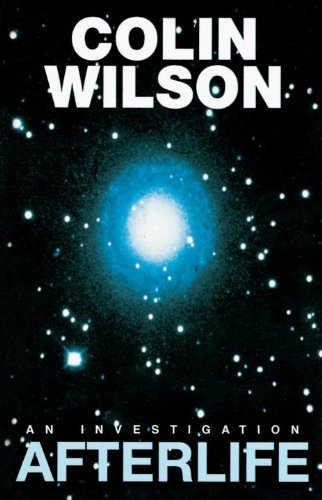
Wilson, C. (1990). Afterlife: A History of Life After Death. Grafton.

ChatGPT said of the book, “It surveys historical and modern reports of post-death contact, including full-body manifestations intended to comfort the living. Covers spiritualist and non-religious traditions alike.”

It even offered to provide the book’s bibliographic citation in all the usual formats, including APA, Chicago, and MLA. After struggling to do that job manually many times, I thought that was a great feature.  Thank you, ChatGPT, for saving me the time and effort!

That was followed by what it called a “Summary Chart” of information:

CaseDeceased PersonMessage TypeWitnessesSourceNotes
Lincoln Whitehouse GhostAbraham LincolnSilent presence, calmMary Todd Lincoln, staffWilson (1990)Seen in bedroom and halls post-assassination

I was impressed!

Except for one tiny detail. When I attempted to buy the book, it did not exist!

It was pure fabrication! Or as AI apologists prefer to call it, a hallucination!

Wilson’s Book

The actual book by Colin Wilson, which I now own, is titled “Afterlife: An Investigation of the Evidence for Life After Death.”

Version 1.0.0

It was initially published in 1985, then under a new publisher in 1987, but NOT in 1990. It was first published in Great Britain by Harrup Limited, not by Grafton. Furthermore, the book includes nary a single word about “Lincoln” or “White House.”

So, ChatGPT got the title, year, and publisher wrong. Therefore, the nicely formatted bibliographic citations were garbage. (Woe be to any student who might include them for “references.”)

Furthermore, ChatGPT’s offer to summarize the book was a red herring. The book had nothing to do with Abraham Lincoln, Mary Todd Lincoln, or the White House.

It is hard to imagine how ChatGPT could cram such a great amount of disinformation into such a small space.

Philip Arnold

To add to the confusion, there is a book titled Afterlife: A History of Life After Death. It was written by Philip Almond, an academic, and published in 2016 by Cornell University Press.  

Ironically, by 2016, Colin Wilson was deep within his Afterlife. He passed in 2013 at the age of 82.

Due Diligence

The phrase “due diligence” refers to thoroughly checking your sources. Your teacher/professor probably knows the assigned subject matter and references better than you and ChatGPT combined.

It cost me five dollars to verify my reference by purchasing the book, but it might cost students a lot more if they don’t. So, students beware! By asking ChatGPT to do your homework, you may risk receiving an F on your grade.

As we say in the aviation world, check, check and double-check. So far, until proven otherwise, no AI assistant is entirely trustworthy.

The Earth is Not Our Property? Really?

Are we the aliens on planet Earth?

At least one brilliant and knowledgeable scientist thinks so.

There was a good reason why a famous 1982 Spielberg movie was named “E.T. the Extraterrestrial.” For decades, “E.T.” was the initialism that American culture associated with Extraterrestrial Aliens, creatures from outer space.

But now it isn’t in fashion. In fact, the notion of “aliens” has seemingly been replaced by NHI, “non-human intelligence,” at least in official government channels. Gone is the obsession with aliens from outer space. In fact, gone is the obsession with aliens, period.

Why might that be? Well, the anthropologist Dr. Michael P. Masters makes the argument in his book The Extratempestrial Model that so-called aliens might be human time travelers.

However, there is a corollary to the old (over a hundred years old) question about aliens that has arisen once again.

Who are the original intelligent occupants of planet Earth? Are we the aliens?

My long-held response to such ludicrous questions used to be, “Poppycock!”

Until a few days ago. Now, I’m not so sure.

Garry Nolan

My understanding of the universe and our place in it was recently shattered when a highly credentialed and respected scientist from Stanford said something incredible during a Podcast interview. Jordan B. Peterson, a Canadian psychologist, author, and Podcaster (The Jordan B. Peterson Podcast), interviewed Dr. Garry Nolan for Episode 563 (July 17, 2025) of his podcast. The tagline for that episode was startling: “Something Non-Human Has Been Here a Long Time.

Dr. Garry Nolan – screen capture from the 2025 interview with Jordan Peterson.

Garry Nolan is a Professor in the Department of Pathology at Stanford University. Actually, that is an understatement. He is a British-American immunologist, academic, inventor, and business executive. He holds the Rachford and Carlota A. Harris Professor Endowed Chair in the Department of Pathology at Stanford University School of Medicine. Nolan has founded biotechnology companies and is the senior science advisor for the Skywatcher program which lures UFOs (UAPs) to land and be captured.

Dangerous stuff there, in my humble opinion.

During the closing minutes of the 90-minute interview, Peterson asked Nolan for his conclusion about the presence of NHI on Earth. Nolan’s response was a shocker.

“I conclude that there’s definitely something here. But I think the more interesting conclusion is if they are, if something is here, it’s likely been here longer than humans have even been civilized. So, it really opens the question, and actually it’s something that I think Charles Fort actually said, …Earth is probably somebody else’s property.” 

Let that sink in for a moment.

Charles Fort

The person Nolan mentioned, Charles Fort, was even more draconian than Nolan. In the first chapter of his first book, Book of the Damned, published in 1919, he claimed that some unknown intelligence may own the Earth and its inhabitants. He wrote, “I think we’re property.” Twelve years later, one of Fort’s speculative writings in his third book, Lo!, is the most chilling of all. He wrote in no uncertain terms, “The Earth is a farm. We are someone else’s property.”

As can be heard in Part 1 of the Audiobook version of his book, Fort explains that the “damned” are those natural observations, data, that “science has excluded.”

Charles Fort. an early 20th century American writer and researcher

Ninety-four years later, most of us view Fort’s imaginative musing with a bit of subdued laughter and a healthy serving of skepticism. However, when a scientist of international caliber and fame such as Stanford’s Gary Nolan, repeats Fort’s idea, deadpan, in all considered seriousness, then, we have the makings of a nightmare.

That may be the reason that the cognoscenti in government and world leadership are so determined to resist full disclosure at all cost. It might scare the crap out of us.

Most of us with a good reason to believe that aliens and their craft have visited Earth, are perplexed by the resistance of the government to disclose visitation from other worlds. Surely, we can accept that fact, despite often-heard protestation that we are “not ready” to know the whole truth.

On the other hand, maybe they are correct. Perhaps, we are not ready for what Gary Nolan and Charles Fort had to say.

What if those two savants, Fort and Nolan, are correct?

What if Nolan’s recent words are a carefully measured leak? Who or what are the true Masters of our planet? Care to guess?

Based on a genetic probability argument, Nolan dismissed the likelihood that they were humanoid. If not human in appearance, then what are they?

Reptilians

Well, there is plenty of legendary lore about super intelligent reptilians hiding deep underground. Is there more to it than lore?

Frankly, I’ve yet to see the slightest hint of evidence for highly advanced, ancient reptilians hiding beneath our feet. If they are hiding, they’re darned good at it!

Without evidence, reptilian overlords are nothing more than a fantasy.

Shadow People

But what if the entities of which Fort and Nolan speak are not physical at all? Some, like Heidi Hollis, refer to vaporous Shadow People. (Hollis’s claim to fame is her 2014 book, The Secret War: A True Story About Real Alien War and Shadow People.) Those supposed entities are negative spirits in the extreme, even demonic, perhaps.

And the worrisome part is that Hollis (and others) claim that such ephemeral phantoms can induce vulnerable humans to do harmful things, harmful to themselves and others.

Well, once again, without verifiable evidence of Shadow People, the reality of these nightmarish entities can be neither proved nor disproved.

But still, since Gary Nolan put his top-notch reputation on the line, I’m hesitant to dismiss his general conclusion out of hand. Something may in fact own us. Unfortunately, Nolan claims not to know WHO owns us.

Methinks people like him know something the rest of us don’t.

Booth Tarkington

Within the Introduction to Charles Fort’s Lo!, I found a delectable passage written by the Pulitzer Prize-winning novelist Booth Tarkington. His words came not from Lo!, per se, but from Tarkington’s introduction to Fort’s New Lands, from 1923. It specifically addressed Fort’s earliest writing.

“(After dipping here and there in The Book of the Damned—) I turned back to the beginning and read this vigorous and astonishing book straight through, and then re-read it for the pleasure it gave me in the way of its writing and in the substance of what it told. … Here indeed was a ‘brush dipped in earthquake and eclipse’… He [Mr. Fort] deals in nightmare, not on the planetary, but on the constellation scale, and the imagination of one who staggers along after him is frequently left gasping and flaccid.”

Apparently, I am not the first person to view Fort’s reasoning, and Nolan’s echo of it, as a nightmare.

Henry Fuseli’s ‘The Nightmare’ from 1781. Google Arts and Culture

Our World Could Have Ended in 2022

In October 2022, Earth experienced a rare gamma-ray burst (GRB 221009A), an event with a 1 in 10,000-year probability. Triggered by a supernova 2.4 billion light-years away, it caused significant atmospheric disturbances. The incident echoed themes from a novel written three years prior, highlighting the potential dangers of such cosmic events.

Most of us didn’t notice that in October 2022 the Earth got its bell rung, a one in 10,000 year event. Three years before, I had written about just such an event.

Earth 1.9 Billion Years Ago

To understand the significance of this event, we must go back 1.9 billion years. Life in the oceans was nothing more than single-cell organisms, simple bacteria. Oxygen levels were extremely low, and the iron-rich oceans were ruddy brown. The ozone layer did not yet exist, so our planet was bathed in harsh ultraviolet radiation.

As the Earth’s bacteria were swimming in their primordial sea, a distant star exploded into a supernova. As occasionally happens, its gaseous remnants collapsed into a black hole. In a cataclysm of violence beyond human imagining, that black hole ejected a 300-second pulse of narrowly confined gamma rays. That burst of highly energetic photons headed into space at light speed, departing the now-dead star in some random direction.

Data of the supernova explosion that resulted in GRB 221009A. Image Credit: NASA.gov.
An artist’s illustration of a gamma-ray burst. (Image credit: NASA’s Goddard Space Flight Center)

During the ensuing 2 billion years1 after that blast, our solar system made about twenty orbits of the massive black hole at the center of our Milky Way Galaxy. Furthermore, the entire galaxy and its nearest neighbors were moving at an incredible 1.34 million miles an hour towards a location in space called The Great Attractor.

Modern Earth

On the ninth of October, 2022, the Earth blundered into the path of that ancient but still massive gamma-ray burst (GRB). During daylight hours, GRB 221009A hit northern Europe dead on. That GRB had enough power to cause a Global Ionospheric Disturbance and wrinkle the Earth’s protective ozone layer.

Energetically, it had orders of magnitude more energy than seen before, earning it the nickname BOAT (Brightest Of All Time.)

The graphic below is found in a NASA article from March 28, 2023. NASA Missions Study What May Be a 1-In-10,000-Year Gamma-ray Burst

This chart compares the BOAT’s prompt emission to that of previous gamma-ray bursts. The BOAT blinded most gamma-ray instruments in space. Credit: NASA’s Goddard Space Flight Center and Adam Goldstein (USRA)

Gamma ray energies versus time for GRB 221009A.2

Distance

How far away is 2.4 billion light years? The Andromeda galaxy, our nearest galactic neighbor, is 2.5 million light years away. So, the GRB source was approximately 1000 times further away.

How do scientists know that? It’s measured from the gamma wave energy’s redshift, which is related to distance by Hubble’s Law and the Hubble Constant.

Atmosphere

Ironically, only three years before the BOAT, I wrote a novel called Atmosphere. That tale featured a deadly GRB that disturbed Earth’s ionosphere and depleted much of the Earth’s atmospheric oxygen.

The following is a quote from the first page.

Four thousand and seventy years ago in a distant part of the Milky Way galaxy, a pair of gravitationally-linked stars began their death spiral, rumbling into a super energetic state that culminated in a gamma-ray burst beamed at light speed into a then-barren region of the Milky Way. In the 21st Century A.D., the Earth was racing at half a million miles per hour towards a cataclysmic collision with the brief but devastating burst of raw energy from that ancient star explosion.

In the city of Papeete, the capital of French Polynesia on the island of Tahiti, children from the local yacht club were on the water with a bevy of single sail dinghies, eight-foot-long training boats with seven-foot sails. Each dingy had room for just one child, so the tiny flotilla of snub-nosed boats was being shepherded by two sailing instructors in a motorboat, busily keeping the students corralled within their marked sailing practice area.

There was a light breeze, ideal conditions for the Optimus training fleet, with enough force to propel the dinghies wherever the sailors commanded, but not strong enough to flip the boats over. The instructors’ coaching could be clearly heard by the young sailors over the slapping of the waves gently jostling each boat.

It was 5:42 in the afternoon of November 23, but the Sun was still high. The Milky Way galaxy lay unseen directly overhead the French Polynesian Windward Islands when a blast from a galactic neighbor, a binary star system in the constellation Sagittarius the Archer, descended like Sagittarius’s arrow directly on top of the luckless Tahitians.

While the students were concentrating on wind and sail, the instructors in their bikini and boardshorts felt a burning sensation over all their exposed skin. Looking up, they saw a sky turning dark orange-brown, a sight never before recorded on Earth. The female guest instructor from California, with blond hair and blue eyes, felt her eyes stinging so severely she could not keep them open.

She shouted to her male counterpart, “I can’t see!”

As he turned away from the darkening sky to look at her, he saw the skin on her face, arms, and thighs were suddenly bright red.

“What the hell happened to you?”

He was Tahitian, and his bronze skin and dark eyes were not as affected as hers, but even at that, he noticed his own arms and legs were burning at the same moment he became aware of the screams coming from the children. They jumped into the water in an attempt to cool their burns. Only one of them, a nine-year-old boy, remained on his boat, convulsed in a seizure.”

Damage

In the story, many living in Tahiti in the French Polynesian Islands were hurt by an intense gamma and X-ray blast from above. The only good news was that the gamma rays struck one of the least populated regions of Earth.

However, those living in high-altitude cities around the world dropped dead shortly after. The effects of oxygen destruction were spread around the world by a perturbed Jetstream. High-altitude cities in China were devastated. Eighteen million died in Mexico. The South American country of Columbia lost 10 million souls, and 150,000 in Santa Fe, New Mexico, dropped in their tracks.

The damage portrayed in the novel was far greater than observed from GRB 221009A. Still, the GRB in the novel erupted only four thousand light years away, not 2.4 billion light years away. As you might imagine, close cosmic explosions are far more deadly than far-distant ones.

Reassessment and Skeptics

Due to the relative closeness of the story’s GRB, my fictional estimation of damage to Earth may have been a gross underestimate. If you multiply the effect of the BOAT a few billion times, the effects become inestimable. Total global extinction is a real possibility.

Some would have us believe that the odds of any GRB colliding with Earth are incredibly remote. The width of the gamma-ray beam from a nascent black hole is simply too narrow. Furthermore, our planet zips through mostly empty space while orbiting our Sun and galaxy. Simultaneously, it’s rushing at millions of miles an hour towards The Great Attractor.

Critics might protest that a novel about a collision between Earth and an ancient GRB is silly, considering the infinitesimally low odds of a collision.

Well, 2022 proved them wrong. It happened.

Luckily for us, the GRB was not closer.

Coincidence

Of course, it was a coincidence that Atmosphere would be published three years before the strongest measured GRB ever. That timing is nearly miraculous, however, compared to what NASA thought. They suggested it could be 10,000 years before the next GRB is strong enough to ruffle our ionosphere.

I suspect NASA has spent the last three years reconsidering the odds of a GRB recurrence. Or they should. The next one could come sooner than thought and be more severe than heretofore experienced. Perhaps even as severe as I wrote about. Or worse.

But the scary thing is, we won’t know if Earth is about to move in front of a dangerous GRB blast that’s been traveling through space for millennia. We won’t know until it hits. There is no warning.

NASA, could you try to fix that?


Further Reading

Record Broken: NASA Just Saw The Biggest Explosion In The Universe So Far

Bright gamma ray burst confounds models of black hole birth, UC Berkeley News

Boom! Powerful Cosmic Explosion May Hint at How Black Holes Form

We Are Being Pulled by the Great Attractor!

  1. The location of an event that occurred 1.9 billion years ago is now 2.4 billion light-years away from Earth due to the universe’s expansion over nearly 2 billion years. ↩︎
  2. Pal, S.; Hobara, Y.; Shvets, A.; Schnoor, P. W.; Hayakawa, M.; and Koloskov, O. First Detection of Global Ionospheric Disturbances Associated with the Most Powerful Gamma Ray Burst GRB221009A. Atmosphere 2023, 14, 217. https://doi.org/10.3390/atmos14020217 ↩︎

Armageddon – Preparation for Visitors

In a post-apocalyptic world following Armageddon, the narrator reflects on survival amid nuclear devastation. As the last known human, they scrape by on lichen and insects, while hinting at extraterrestrial Arvidx plans to take over Earth post-war.

Armageddon

I may have been the only survivor of Armageddon.

I don’t know for sure. All communications have been down for two years. They were never great where I hid in the mountains, two hundred miles from the closest town. But as far as I know, there are no more towns.

From day to day, days that go unnumbered, all I have are my memories and dreams of the past.

Most of the animals are gone, vaporized, or frozen. So, my skinny body has learned to eke out a small amount of sustenance from the lichen I scrape off rocks, plus the occasional worm or grub. The cold has kept insects mostly dormant, so they can’t skitter away from my fingers as fast as they used to.

Armageddon Gamble

I remember a story from the early atomic age in which a physicist at Los Alamos National Laboratory attempted to “tickle the demon core.” That spherical core was a sphere of high-grade plutonium surrounded by one of two half-shells of beryllium. When the top and bottom of those beryllium half shells were separated, fission reactions within the core could not lead to a nuclear chain reaction. When they were too close, runaway fission would occur.

One day, Louis Slotin used the hand-driven rotation of a screwdriver blade to slowly lower the gap between the two beryllium halves and then widen it again. He played with the atomic demon while nearby technicians watched.

But when the screwdriver accidentally slipped, the half-shells fell together. A blue flash lit the room, and at the speed of light, a fatal dose of radiation shot through Slotin’s body.

Nine days later, he died.

Two years ago, U.S. politicians were making the same gamble. Play with nuclear fire, and maybe you won’t get killed. But then again, you might.

Back then, I listened to the news that the U.S. was testing Russia. In return, Russia and everyone else it seemed, was threatening nuclear war. Didn’t anyone know what nuclear war would mean?

Well, of course, they did. No one could be that stupid. But they did it anyway.

Aliens

Ironically, simultaneous with war fever, there seemed to be anxiety in Washington about alien disclosure. There were two factions, the pro-disclosure and the anti-disclosure groups. The anti-disclosure groups all believed the truth about extraterrestrial aliens was too much for the human population to fathom. Initially, I took some offense at that, but I guess it was true after all.

In the end, political disagreements didn’t matter; the War made such arguments moot. D.C. no longer exists. And neither does Moscow, or Paris, Berlin, or London. Swiss neutrality meant nothing. All their cities were destroyed, and the unlucky survivors in the Swiss, French, and Italian Alps all froze to death or starved to death, slowly and painfully.

Nuclear winter is much more than a theory.

All it took was one slip of the proverbial screwdriver to change everything. The world we once knew is gone, but the insanity of it all is a matter of opinion.

Arvidx

Remember those ET aliens we were talking about in 2024? Why weren’t they here?

Well, you see, the Earth was too hot for the Arvidx, too bright for their skin and eyes, and there was way too much oxygen. Political radicals are dangerous, but free radicals are worse.

The Arvidx pioneers who came to Earth had to remain hidden in the deep oceans. By the time human technology advanced enough for the Arvidx craft to be detected, the wheels of Change were already in motion.

True, the Arvidx had always intended to steal Earth from the humans. But until the middle of the 20th century, terraforming Earth to make it suitable as an Arvidx home required far more effort than it was worth.

But when humans became nuclear capable, the Arvidx leaders saw an opportunity. Why should they invest effort in terraforming Earth when humans can do it for them? After all, what better way to reduce toxic oxygen than by nuclear firestorms and the death of oxygen-producing vegetation?

And what better way to reduce the atmosphere’s temperature by 20° Centigrade than by a prolonged nuclear winter? And what better way to increase the background level of gamma rays than by tearing gigantic holes in the ozone layer?

It was a perfect plan.

Replacement

Most importantly, what better way to eliminate the scourge of the human population than to encourage them to off themselves?

All they needed were the Arvidx-human hybrids, like myself, to sneak into critical roles of world governance surreptitiously. From their positions of power, they could be champions for war.

In truth, I had no interest in politics. I was an Arvidx hybrid, but not a very good one. However, growing up feral in the mountains had its perks. No one was my boss.

As for food? Before the war, my rifle skills ensured a steady supply of protein.

I do miss that protein. Lichen tastes like crap, but it has lots of fiber. It keeps me alive and regular. The ability to be nourished by it must be due to the few Arvidx genes functioning correctly in me. But still, I do miss an occasional venison steak.

I do see dimmer days ahead. Which is good, because I lost my sunglasses years ago.

Also, now that humans have prepared the world for us, I have lots of company from full-blooded Arvidx. Consequently, my diet has improved, and things are finally looking up.

You Don’t Need a Tardis for Time Travel

The author discusses their interaction with Dr. Harold Puthoff, a key figure in the CIA’s Remote Viewing program, and its declassification leading to unique storytelling opportunities. Their new novelette, “Soul Has No Name,” explores time travel through human soul “fingerprints.”

Twice, I have been suspected of being a CIA Remote Viewer. I have no idea why.

Harold Puthoff

However, I have hosted the Ph.D. physicist and engineer Dr. Harold Puthoff, who initiated the CIA’s Remote Viewing program. Puthoff, best known currently as a theoretician in UFO propulsion systems within the UAP Disclosure effort, came to our laboratory to lecture our Navy scientists on advanced physics, namely scalar energy.

He had been slated to speak elsewhere, but at the last minute, that Navy venue became unavailable. Only after Puthoff returned to the Stanford Research Institute did I discover his past involvement in the dark side of national intelligence

Stargate Project

After the U.S. Army showed an interest in the CIA’s remote viewing results, the program became known as the Stargate Project. Not surprisingly, the Defense Intelligence Agency (DIA) was involved. Since Stargate has been declassified, the internet is awash with information about this unique intelligence-gathering technique.

What does that have to do with the Tardis?

As the “Doctor Who” fandom knows, the Tardis is a fictional time machine/spaceship. Even though the Tardis looks like a nondescript British Police phone booth, it is anything but.

Photo by Nick Fewings on Unsplash

Remote Viewing as a Literary Device

Thanks to declassification, we know that Stargate Project remote viewers could reportedly “view” past and future events. That is, the viewers could travel through time sans Tardis.

But just imagine what Remote Viewing can contribute to storytelling. Based on what we know about real-life remote viewing, a character in a book or short story can be bestowed with seemingly magical powers to see clearly at a distance, both backward and forward in time. Best of all, the reader does not need to suspend disbelief because those powers are real, at least in trained viewers. 

This author could not resist using that literary device in books two and three of the Jason Parker Trilogy. In Triangle and Atmosphere, a blind remote viewer keeps distant tabs on the series’ protagonist and his female accomplice.

Borrowing again from Remote Viewing, there is the new $2.99 novelette Soul Has No Name.

Soul Has No Name

The above history, including my serendipitous nexus with the avowed father of the Remote Viewing programs, provides a little background on my latest publication. Soul Has No Name, A Story of Soul Travel is a longish short story (aka novelette) about a specialized, boutique form of time travel from the comfort of a padded recliner. No phone booth is required.

That makes it yet another form of time travel using remote viewing. Of course, such a thing is entirely fictional.

Unless it isn’t.

Soulmates

The story’s premise differs from other time travel stories because it’s dependent on future technology that can identify the “fingerprint” of human souls. After all, based on known physics, energy cannot be created or destroyed. Likewise, a soul’s energy is unique and everlasting. Knowing those soul fingerprints, technology can be applied to match those unique energies throughout time. One’s fingerprints can lead to “meetings” with soul mates. Past lives literally become alive, at least for a brief soul-travel interval.

(Please remember the previous paragraph includes some fiction. It only makes sense to the reader after the requisite “suspension of disbelief.” For the reader (and this author), there is no requisite belief in past lives, reincarnation, or anything else. Like any good science fiction, the story assumes certain things can happen, whether they actually can or not. It’s “make-believe.”)

Of course, no time travel story would be complete without someone screwing things up. In this case, the protagonist has his entire life upended for a reason and in a way that no one would suspect.

All things considered, Soul Has No Name is unique in the science fiction time-travel genre.

Review

Commercialized Time Travel as a boutique industry.

In all the millions of words I’ve read, I never came across Clarke’s time travel concept. This story ranks near the top of my long list of science fiction short stories.” Robert G. Williscroft, Bestselling author of The Starchild Saga and The Oort Chronicles.

Shortly after Time Travel is commercialized, a boutique specialty focuses on identifying and tracking human souls through their unique energy “fingerprints”—fingerprints that remain unchanged through all incarnations of that soul, swapping from one gender to the next, and even while inhabiting other Earth or off-planet locations.

In the mid-21st Century, commercial time travel to experience a soul’s previous lifetimes becomes a most exotic and expensive recreational adventure, taking the explorer on individualized trips back through time. Through Spirit Writing, a fallout of time travel, we follow a Tennessee family that drops in on its Scottish Highlander forebears in the 1620s, rebounding back to Atlanta in 2040, then on to Boston and Hungary in 2080. Soul connections, multi-generational romance, and devastating foibles highlight this tale.”

Header image credit: Photo by Dingzeyu Li on Unsplash

Demystifying Rebreather Scrubbers, RF4 Malta

Rebreather Forum 4 in Malta, organized by Michael Menduno, featured presentations on advanced rebreather diving techniques, including Dr. John Clarke’s talk on CO2 scrubbers, emphasizing safety, equipment selection, and individual diver variations. Presentations are accessible online.

Rebreather Forum 4, held in 2023 in Malta was yet another Herculean undertaking by Michael Menduno, the executive editor of Global Underwater Explorer’s (aka GUE) InDepth magazine and various international publications (see the above link for details.) Michael was the journalist who coined the term ‘technical diving”, and also created Aquacorp Magazine.

I’ve known and appreciated Michael for decades and gave presentations at his Rebreather Forums 2 and 3. My role on the RF4 Science Panel was to help select the best speakers for the Forum, to herd cats when necessary, and to speak.

The Book

Of course, with a new book (basically a textbook) on one of the most mysterious and technical aspects of rebreather diving, I spoke on the subject of “Demystifying Scrubbers”.

Photo courtesy of Rosemary Lunn

Breakthrough can be found on Amazon in paperback or Kindle, or elsewhere in ePub format.

Photo courtesy of Axel Schoeller (1963-2023)

Presentation Description

Here, I’ve borrowed Menduno’s own words describing my talk.

Plunge into the intricate world of rebreather diving safety and techniques with retired scientific director of the US Navy Experimental Diving Unit (NEDU) and author, Dr. John Clarke, who illuminates the inner workings of rebreather CO2 scrubbers, based on extensive research work by the US Navy and his own modeling efforts. This talk unveils the critical aspects of CCR diving gear selection, especially focusing on the importance of rebreather CO2 scrubbers, soda lime quality, and the proper maintenance of canister duration to ensure diver safety.

From the influence of cold water on CCR diving equipment to the vital role of physiological variation among divers, discover how individual differences significantly impact rebreather canister duration and CO2 absorption rates. Engage with real-life scenarios and experiments that shed light on the potential dangers of compromised soda lime; explore the implications of using indicating soda sorb without proper Navy notification (leading to catastrophic failures in rebreather functionality). Moreover, the discussion covers simulated physical models that offer insights into the dynamics of CO2 absorption in rebreather diving. The models emphasize the importance of understanding your CCR diving equipment and recognizing when changes, no matter how slight, in soda lime granule size or distribution might signal a risk. This video is an essential watch for any rebreather diver seeking to deepen their safety knowledge, highlighting the blend of technical expertise, physiological awareness, and practical vigilance required to navigate the underwater world securely.

Michael Menduno

Video

The video of my entire talk can be viewed here.

All RF4 Presentations

All of the RF4 presentations are available at this RF4 link. It is chock full of the best information available, from the best presenters in the field of Rebreather Diving.

Confessions of a UFO Skeptic

The recent U.S. government acknowledgment of UFOs has forced skeptics to confront their past dismissals. Scientist Eric Weinstein apologized for underestimating the UFO community, acknowledging their credibility and urging fellow scientists to investigate UAP seriously. This shift highlights the importance of remaining open-minded to realities beyond perceived boundaries.

Some lines are risky to cross. The line separating fact from fantasy is one such line.

What is remarkable to me about the U.S. government’s recent disclosure of the reality of UFOs, or UAPs, is that even those skeptics who have a reputation for rolling their eyes and bursting forth with ridicule have had to face the truth. Too many people are righteously aware, and claiming they aren’t, doesn’t work anymore. What many smart people have long considered fantasy, is now known to be fact. Confusing fact, perhaps, but fact nevertheless.

This scientist-writer believes that closing your mind to possibilities does nothing more than handicap your consciousness. If you refuse to peer over the boundary of your perceived reality, you’ll limit your awareness. And oh, what interesting things you’ll miss.  

Recently I was surprised to read an open apology from a renowned skeptic of the UFO phenomena, a Harvard-trained mathematical physicist and cultural commentator, Eric Weinstein.

Recently, David Bates gave the tweets from Eric Weinstein room on his pages. Not only was Weinstein brutally honest, but I found his challenge to closed-minded scientists especially refreshing.

Weinstein’s Tweets

From Weinstein’s own tweets, Bates quoted the following.

To all the UFO people who were getting it right: I blew it. I thought you were bored, easily convinced, read too much sci-fi as kids, were easily taken in. I thought there was no way this could ambiguously exist in a world flooded with sensors. I thought you were not getting it.

I am very late to your party and even having gotten the report mostly right, it has been exceptionally unpleasant to get in front of it by even a few months. I can only imagine how it feels after the many years the US has gaslight you all while knowing you were not wrong.

A lot of UFO people are nutty. But you the careful community that called balls and strikes as best you could with limited information deserve not only rehabilitation in the minds of the public, but some official recognition that you are to be listened to in the future. Thank you.

I believe you now when you say that there is even much more high quality data available but that it has not been released. At a personal level: You were right, I was wrong. Thanks for letting me join you at the ‘last minute’ in the few months before the report. I’ll listen more.

I also wanted to say to the non-ufo community that whatever I got right largely didn’t come from me. It came from patriots, fellow scientists & others who were not taken in the way I was. All I did was a bit of filtering and after-market analysis given the gravity of the issue.

According to Bates, Weinstein followed up a few hours later.

It’s totally irresponsible for any scientist to refuse to investigate UAP after this report with a full and unpruned decision tree at her side. That includes considering the total incompetence of the defense department, *aliens*, spoofing by enemies and UFO political economy.

And US scientists who refuse to take this seriously as per the above tweet are neglecting and/or turning their back on our national and international security responsibilities given this report. That is my belief. Full stop.

Thank you, David Bates, for making these tweets accessible.

Discover More

Seeking an exhaustively compiled account of a particular class of large UFOs, the Triangles? Look no further than the investigative writings of David Marler. In my opinion, as current UFO investigators go, he is the most careful and detailed of them all.  

From the cover of Triangular UFOs: An Estimate of the Situation.

Weinstein photo credit: By Rebel Wisdom, CC BY 3.0, https://commons.wikimedia.org/w/index.php?curid=76267996

Science Fiction Writers and the New UFO Report

I thought the jig was up when I heard the top U.S. Intelligence Agency was releasing what it knew about UFOs. (See link at the bottom of this post.)

Who would want to read a science fiction novel about UFOs and aliens when the truth is—as they say—stranger than fiction?

What would happen to all those imagined UFOs that slice through water as easily as air? What about spaceships that are massive quantum computers that sense, think and plot the safest course through a universe littered with obstacles both large and small?

What about ships powered by the free energy of the cosmos, steered by the photonic vibrations of colored lights modulating the propulsive energy at the core of the cosmic vacuum?

What would be the fun in imagining aquatic species able to tolerate high pressures but unable to survive the toxic oxygen in our atmosphere? Where would the mystery go once we knew the truth?

 What could inspire awe in reading about humans working with strange creatures who teach us to genetically engineer a new breed of humans to survive coming cosmic cataclysms?

What is the use in imagining, once you know the truth?

Departing for Mars. Illustration from Atmosphere, Book 3 of the Jason Parker Trilogy.

Well, as we now know, science fiction writers needn’t worry. Yes, the U.S. military finally admitted that UFOs exist, which is a vast improvement in government transparency. And, let’s admit it, the reality of UFOs has been one of the worst kept secrets of all time. The darn things keep showing up at the strangest times, sometimes far away, but sometimes incredibly close.

The luckiest humans, those who win the UFO reveal lottery with a closeup view of the craft, have their lives changed forever. This I know. And the number of such human observers are legion.

For reasons known only to the government, their admission of UFOs is not accompanied by the sort of detail for which most UFO aficionados were hoping. But frankly, that is likely a deliberate ploy for reasons of national security. I truly believe, and fully support, the continued need for secrecy.

And because of that secrecy, science fiction writers are still free to imagine what they will. After all, fantasy might be the best way to sow awareness of things we cannot imagine, outside of fiction.

But there are some things that science fiction writers like myself find hard to comprehend. The questions I pose here are ones that in my opinion are of much greater importance than the reality of UFOs, or even ETs from distant star systems.

Frequently, nonscientists attempt to explain the weird nature of some UFO sightings by supposing the craft appear from some bubble of an extradimensional universe. The craft and their supposed inhabitants are perhaps not from a portion of our universe far, far away, but rather they are in fact—right here. Right here as in right next door in a higher dimensional universe, or multiverse!

I repeat, I have heard such things from nonscientists. So, what do scientists think?

With few exceptions, they ignore it. Even the multiverse-believing cosmologists don’t yet have the tools to detect unseen universes. Not seeing is not believing, although to be fair, they may spend a lot of time thinking about it.

I would agree that much of the popular writings on the subject of unreachable dimensions are pseudoscience, or less politely, poppycock. Except for the fact that Einstein once said, “It is entirely possible that behind the perception of our senses, worlds are hidden of which we are unaware.”

So, as a scientist and writer, I hold fast to the fact that long after we know that three-dimensional spacecraft and their alien crews exist, we still will not understand higher dimensional universes. Are there hidden worlds there, as wondered by Einstein, populated with sentient beings?

I wish I knew for sure. I would dearly love to possess a higher dimensional container, a sort of a stripped-down, dumb version of Dr. Who’s Tardis. That way I could discard accumulated junk and never see it again. And I’d never get charged disposal fees.

Free energy would be life changing, but free junk disposal would be the icing on the cake.

Top image: A scene from Atmosphere, book 3 of the Jason Parker Trilogy. (Copyright, 2020, 2021)

Here’s the link to the Preliminary Assessment from the Office of the Director of National Intelligence. (For Jason Parker readers, that’s the same office that fictionally hired Laura Smith to be their Subject Matter Expert on ET Affairs.)

Bubble Submarines Resurface After Fifty-Two Years

A December, 2019 article in the New York Times has the catchy headline, “Bubble Subs Arise, Opening Eyes to the Deep Sea.”

From my perspective, it’s always great when anything about the deep sea attracts the attention of major newspapers. In general, well researched and written publications on the subject are hard to find. A happy exception is biologist Bill Streever’s latest book, In Oceans Deep.

Click photo to go to the Amazon page.

Streever’s excellent book has much to say about free diving, Navy diving, and even one-atmosphere diving suits (wearable submarines, if you will.)

But back to the NYT. William Broad’s article on mini-submarines is both colorful and informative. I urge you to read it if you have even the slightest interest in the undersea world.

Click photo to link to the NYT article.

However, just as the title of this blog post is deliberately hyperbolic, tongue in cheek, the NYT article is a bit misleading. Just because the technology may be new to the New York Times, it doesn’t mean it’s truly new. Bubble Subs have not actually risen of late. They, and the concepts behind them, have been around for a long time.

To prove my point, this blog post republishes the most interesting parts of an article I penned in the Georgia Tech Engineer way back in 1967. It’s called The Depth Challenger. The article is a little technical, which is the norm for an engineering school magazine, but it was also written to appeal to a diverse student body.

Artist’s conception of a 56-in diameter sphere mounted on its 16-foot maneuvering sled.

The article begins with a short piece of descriptive prose.

A brittle star, its arms twitching, spreading across the firm, grey mud, stops as a tracking light sweeps over and beyond it. An instant later the light returns and fixes on the animal as the whirring bubble slides in close over­head. The sphere hovers briefly then moves off, circling, finally disappearing below a canyon rim. When minutes later the bubble settles to rest on the soft canyon floor, cameras clicking, the two men inside sit gazing, peering, with four miles of water above their heads. These men are new frontiersmen – the oceanographers.

One of the greatest problems preventing our full utilization of the ocean’s potential is the inability of re­ search devices to withstand the enormous pressures exerted by deep water. At four thousand feet, the sea exerts one ton of pressure on each square inch of surface. At thirty-five thousand feet, the pressure is more than seven and a half tons per square inch. To date, nothing has been developed with the ideal requirements of 1) withstanding deep sea pressure, 2) containing man for extended periods of time, and 3) enabling direct visual observation.  However, a solution to these problems may soon be met by glass submarines. H. A. Perry, research materials engineer at the Naval Ordnance Laboratory of Silver Springs, Maryland, is currently researching the feasibility of transparent submarine hulls. Perry states that glass provides a unique degree of buoyancy and safety in deep submergence hulls.

To test his original hypothesis, Perry and other NOL scientists set sail in 1964 aboard the Navy research vessel Gillis with a cargo of 95 hollow spheres provided by Corning Glass Works and the Pittsburgh Plate Glass Company. Once over the Puerto Rico trench, these spheres were lowered to depths of 300, 7000, 1400 and 2100 feet. Pentolite-charges were set a fixed distance away and detonated. If no leakage of the sphere occurred, the charges were moved closer until the glass finally failed. At this point, a “critical distance” was defined.  As depth increased, the compressive strength of the glass also increased. With metal hulls, the results are just the opposite.

(As a side note, a few years later I set sail on the same vessel, by then renamed the RV Gillis, for a research cruise to the Puerto Rico Trench.)

Apparently, the deeper a glass submarine dives, the safer are its occupants; that is, down to an optimum depth of about 21,000 feet where the compressive strength diminishes until buckling finally occurs at a theoretical depth of 55,000 feet. However, the deepest part of the ocean, the Challenger Deep, is a trench descending to only 35,888 feet, so the theoretical limit for glass spheres poses no problem. It will be noted, though, that the compressive strength of conventional spheres at relatively low pressures is in itself rather low. The chances of a mariner surviving an accidental collision on down to a depth of several hundred feet is nil. Obviously, there is a need for either foolhardy scientists or “pre-compressed hulls.”

The full article with illustrations can be read here.

Bubble-Sub-1

In my opinion, the epitome of bubble submarines has been the Johnson Sea Link, pictured here. This revolutionary bubble submarine started operations in 1971, with upgrades in 1972, just a few years after I got wind of it.

Verified by ExactMetrics