Just because technology is easy to use, doesn’t mean it’s right.
ChatGPT is renowned for its wide breadth of knowledge. As a scientist-writer, I use it almost daily to discover sources for my writing. For instance, to validate a strange storyline I knew zilch about, I gave ChatGPT the following prompt:
“List examples of dead people who have reappeared in full human form to provide a message to loved ones.”
It responded thusly:
Wilson, C. (1990). Afterlife: A History of Life After Death. Grafton.
ChatGPT said of the book, “It surveys historical and modern reports of post-death contact, including full-body manifestations intended to comfort the living. Covers spiritualist and non-religious traditions alike.”
It even offered to provide the book’s bibliographic citation in all the usual formats, including APA, Chicago, and MLA. After struggling to do that job manually many times, I thought that was a great feature. Thank you, ChatGPT, for saving me the time and effort!
That was followed by what it called a “Summary Chart” of information:
| Case | Deceased Person | Message Type | Witnesses | Source | Notes |
|---|---|---|---|---|---|
| Lincoln Whitehouse Ghost | Abraham Lincoln | Silent presence, calm | Mary Todd Lincoln, staff | Wilson (1990) | Seen in bedroom and halls post-assassination |
I was impressed!
Except for one tiny detail. When I attempted to buy the book, it did not exist!
It was pure fabrication! Or as AI apologists prefer to call it, a hallucination!
Wilson’s Book
The actual book by Colin Wilson, which I now own, is titled “Afterlife: An Investigation of the Evidence for Life After Death.”
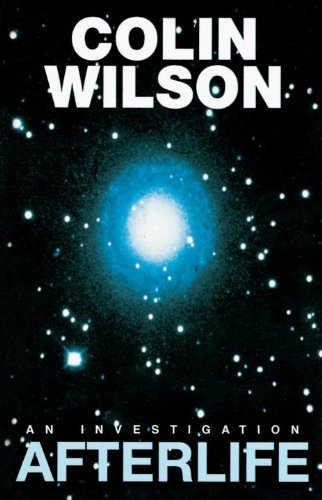
It was initially published in 1985, then under a new publisher in 1987, but NOT in 1990. It was first published in Great Britain by Harrup Limited, not by Grafton. Furthermore, the book includes nary a single word about “Lincoln” or “White House.”
So, ChatGPT got the title, year, and publisher wrong. Therefore, the nicely formatted bibliographic citations were garbage. (Woe be to any student who might include them for “references.”)
Furthermore, ChatGPT’s offer to summarize the book was a red herring. The book had nothing to do with Abraham Lincoln, Mary Todd Lincoln, or the White House.
It is hard to imagine how ChatGPT could cram such a great amount of disinformation into such a small space.
Philip Arnold
To add to the confusion, there is a book titled Afterlife: A History of Life After Death. It was written by Philip Almond, an academic, and published in 2016 by Cornell University Press.

Ironically, by 2016, Colin Wilson was deep within his Afterlife. He passed in 2013 at the age of 82.
Due Diligence
The phrase “due diligence” refers to thoroughly checking your sources. Your teacher/professor probably knows the assigned subject matter and references better than you and ChatGPT combined.
It cost me five dollars to verify my reference by purchasing the book, but it might cost students a lot more if they don’t. So, students beware! By asking ChatGPT to do your homework, you may risk receiving an F on your grade.
As we say in the aviation world, check, check and double-check. So far, until proven otherwise, no AI assistant is entirely trustworthy.
 Napoleon Bonaparte once famously said, “A soldier will fight long and hard for a bit of colored ribbon.”